กินโปรตีนอย่างไรให้ผู้สูงอายุแข็งแรง ลดเสี่ยงหกล้ม และใช้ชีวิตได้คล่องตัว
Student blog — 30/01/2026
Education

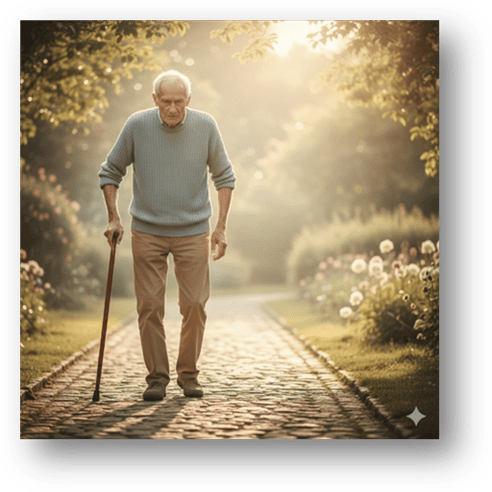
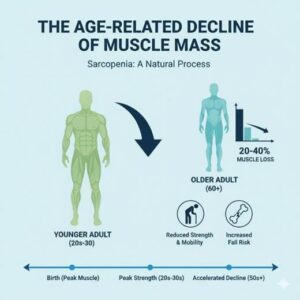
เมื่ออายุเพิ่มขึ้น กล้ามเนื้อคือส่วนที่เสื่อมลงเร็วที่สุด ผู้สูงอายุหลายคนเริ่มเดินช้าลง ลุก–นั่งยาก หรือยืนทรงตัวได้ไม่นาน ทั้งหมดนี้เกิดจากการสูญเสียมวลกล้ามเนื้อปีละ 1–2% และแรงกล้ามเนื้อลดลงถึง 3% ต่อปี หากได้รับโปรตีนไม่เพียงพอ การเคลื่อนไหวจะยิ่งแย่ลง และเสี่ยงต่อการหกล้มมากขึ้น ซึ่งเป็นสาเหตุหลักของกระดูกหักและการพึ่งพาผู้อื่นในวัยสูงอายุ
ข่าวดี คือ งานวิจัยปัจจุบันยืนยันว่า การกินโปรตีนให้พอทุกวันร่วมกับการออกกำลังกายแรงต้าน สามารถช่วยชะลอการสูญเสียกล้ามเนื้อได้จริง
ทำไมผู้สูงอายุ “ต้องการโปรตีนมากกว่าคนวัยอื่น”?
เมื่ออายุมากขึ้น ร่างกายจะเกิดภาวะที่เรียกว่า Anabolic Resistance หรือ “ภาวะดื้อโปรตีน” ซึ่งหมายถึงการที่ร่างกายสร้างกล้ามเนื้อได้น้อยลงแม้ว่าจะได้รับโปรตีนในปริมาณเท่ากับคนวัยทำงานก็ตาม โดยงานวิจัยพบว่าระบบสร้างโปรตีนในกล้ามเนื้อ (MPS) จะทำงานลดลงตามวัย รวมถึงสัญญาณสำคัญอย่าง mTORC1 ซึ่งเป็นตัวเปิดสวิตช์ให้ร่างกายเริ่มกระบวนการสร้างกล้ามเนื้อก็ลดลงไปด้วย
อีกทั้งผู้สูงอายุยังมีภาวะอักเสบเรื้อรังและความเครียดออกซิเดชันสูงขึ้น ทำให้กระบวนการซ่อมแซมกล้ามเนื้อช้าลงกว่าเดิม ส่งผลให้ผู้สูงอายุที่ได้รับโปรตีนน้อยเสี่ยงต่อการเกิดภาวะเปราะบาง (Frailty) เดินช้าลง ทรงตัวไม่ดี และมีความเสี่ยงในการหกล้มสูงขึ้น
ผู้สูงอายุต้องกินโปรตีนเท่าไหร่?
งานวิจัยตั้งแต่ปี 2018–2024 สรุปตรงกันว่าปริมาณโปรตีนขั้นต่ำที่ผู้สูงอายุต้องการคือ 1.0–1.2 กรัมต่อน้ำหนักตัวหนึ่งกิโลกรัมต่อวัน เหมาะสำหรับผู้สูงอายุทั่วไปที่ต้องการคงความแข็งแรงของกล้ามเนื้อ ส่วนปริมาณที่ “เหมาะสมที่สุด”
สำหรับผู้ที่ออกกำลังกาย ฟื้นฟูร่างกาย หรือมีโรคเรื้อรังบางประเภท คือ 1.2–1.5 กรัมต่อน้ำหนักตัวหนึ่งกิโลกรัมต่อวัน เช่น หากผู้สูงอายุหนัก 60 กิโลกรัม ควรได้รับโปรตีนประมาณ 60–90 กรัมต่อวัน ซึ่งระดับโปรตีนนี้มีหลักฐานวิจัยยืนยันว่า ช่วยเพิ่มความแข็งแรงของกล้ามเนื้อ ทำให้เดินเร็วขึ้น ทรงตัวดีขึ้น และลดความเสี่ยงการหกล้มได้จริง
ผู้สูงอายุควรกินโปรตีนอย่างไรให้ได้ผล?
งานวิจัยสมัยใหม่ชี้ชัดว่าต้อง “กระจายโปรตีนทุกมื้อ” ไม่กินหนักเพียงมื้อเดียว เพราะการแบ่งโปรตีนออกเป็น 2–3 มื้อช่วยกระตุ้นการสร้างโปรตีนกล้ามเนื้อ (MPS) ได้ต่อเนื่องมากกว่าอย่างมีนัยสำคัญ นอกจากนี้ ปริมาณโปรตีนต่อมื้อควรอยู่ที่ 30–40 กรัม เพราะการกินต่ำกว่า 20 กรัมต่อมื้อกระตุ้นกล้ามเนื้อได้น้อยมากและอาจไม่เพียงพอสำหรับผู้สูงอายุที่มีภาวะดื้อโปรตีน ผู้สูงอายุควรเลือกโปรตีนที่มี “ลิวซีนสูง” ซึ่งเป็นกรดอะมิโนสำคัญที่ช่วยเปิดสวิตช์ mTOR เพื่อกระตุ้นการสร้างกล้ามเนื้อ เช่น ไข่ ปลา นม ถั่วเหลือง และที่ได้ผลดีที่สุดคือการกินโปรตีนเพียงพอ “ควบคู่กับการออกกำลังกายแรงต้าน” เช่น ยกน้ำหนักเบา ยืดต้าน หรือท่าฝึกกล้ามเนื้อ งานวิจัยหลายชิ้นตั้งแต่ปี 2021–2025 ยืนยันว่าการผสมผสานนี้ช่วยเพิ่มมวลและความแข็งแรงของกล้ามเนื้ออย่างเด่นชัดที่สุด
แหล่งโปรตีนคุณภาพสูงสำหรับผู้สูงวัย
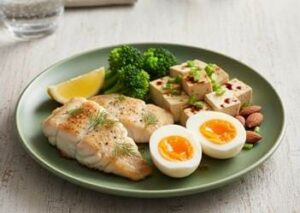
แหล่งโปรตีนคุณภาพสูงที่เหมาะสำหรับผู้สูงอายุควรเป็นโปรตีนที่ เคี้ยวง่าย ย่อยง่าย และมีลิวซีนสูง ซึ่งช่วยกระตุ้นการสร้างกล้ามเนื้อได้ดี โดยงานวิจัยพบว่า ปลา ไข่ เต้าหู้ ถั่วเหลือง นม นมถั่วเหลือง ไก่ไม่ติดมัน และถั่วต่าง ๆ เป็นตัวเลือกที่ปลอดภัยและเหมาะสมที่สุด เพราะโปรตีนจากปลาและไข่ย่อยง่ายกว่าเนื้อแดง ทำให้ร่างกายดูดซึมและนำไปใช้ได้ดีในผู้สูงอายุที่ระบบย่อยอาหารทำงานช้าลง

ส่วนเวย์โปรตีนแม้จะกระตุ้นการสร้างโปรตีนในกล้ามเนื้อ (MPS) ได้ดีที่สุดตามงานวิจัย แต่ไม่จำเป็นสำหรับทุกคน เพราะผู้สูงอายุจำนวนมากสามารถได้รับโปรตีนเพียงพอจากอาหารจริง หากเลือกและจัดสรรให้เหมาะสม
โปรตีนช่วยลดความเสี่ยงล้มได้จริงหรือ?
โปรตีนช่วยลดความเสี่ยงล้มได้จริง โดยงานวิจัยพบว่าผู้สูงอายุที่ได้รับโปรตีนเพียงพอจะเดินเร็วขึ้น แข็งแรงขึ้น และมีโอกาสล้มน้อยลง โดยโปรตีนจากสัตว์สัมพันธ์กับความเสี่ยงการล้มที่ลดลง และผู้ที่ได้รับโปรตีนเพียงพอมักมีโอกาสล้มน้อยกว่ากลุ่มที่บริโภคไม่พอ

นอกจากนี้โปรตีนยังช่วยเพิ่มความเร็วในการเดิน (walking speed) และความแข็งแรงของขา (leg strength) อย่างมีนัยสำคัญ และเมื่อโปรตีนถูกบริโภคร่วมกับการออกกำลังกาย โดยเฉพาะการฝึกแรงต้าน จะช่วยให้กล้ามเนื้อแข็งแรงขึ้นมากและลดความเสี่ยงการล้มได้มีประสิทธิภาพยิ่งขึ้น
ข้อควรระวังในการกินโปรตีนสำหรับผู้สูงอายุ
ข้อควรระวังในการกินโปรตีนสำหรับผู้สูงอายุคือ แม้โปรตีนจะจำเป็นต่อการสร้างและรักษากล้ามเนื้อ แต่ผู้ที่มีโรคไตเรื้อรังควรปรึกษาแพทย์ก่อนเพิ่มปริมาณโปรตีน เพราะอาจกระทบต่อการทำงานของไตได้ นอกจากนี้ผู้ที่ดื่มน้ำน้อยควรเพิ่มปริมาณน้ำเมื่อกินโปรตีนเพื่อป้องกันภาวะขาดน้ำและช่วยให้ไตทำงานได้ดีขึ้น ควรหลีกเลี่ยงเนื้อสัตว์ติดมันเพราะไขมันอิ่มตัวสูงอาจเพิ่มความเสี่ยงโรคหัวใจ และควรแบ่งการกินโปรตีนออกเป็นหลายมื้อระหว่างวันเพื่อลดอาการแน่นท้องและช่วยให้ร่างกายดูดซึมได้มีประสิทธิภาพมากขึ้น
บทสรุป
โปรตีนเป็นหัวใจสำคัญของสุขภาพผู้สูงอายุ การกินโปรตีนให้เพียงพอทุกวัน กระจายให้ครบทุกมื้อ เลือกโปรตีนที่ย่อยง่าย เช่น ปลา ไข่ เต้าหู้ และควบคู่กับการออกกำลังกายแบบแรงต้าน จะช่วยให้ผู้สูงวัยเดินคล่องขึ้น กล้ามเนื้อแข็งแรงขึ้น ทรงตัวได้ดีขึ้น ลดความเสี่ยงการล้ม และใช้ชีวิตประจำวันได้อย่างมั่นใจมากขึ้น
เรียบเรียงโดย: ผู้ช่วยศาสตราจารย์ยุภา โพผา
แหล่งอ้างอิง
- Prokopidis, K., Chambers, E. S., Lochlainn, M. N., & Witard, O. C. (2021). Mechanisms linking the gut-muscle axis with muscle protein metabolism and anabolic resistance: Implications for older adults at risk of sarcopenia. Frontiers in Physiology, 12. https://doi.org/10.3389/fphys.2021.770455
- Takahara, T., Amemiya, Y., Sugiyama, R., Maki, M., & Shibata, H. (2020). Amino acid-dependent control of mTORC1 signaling: A variety of regulatory modes. Journal of Biomedical Science, 27(1). https://doi.org/10.1186/s12929-020-00679-2
- Wu, X., Zhu, N., He, L., Xu, M., & Li, Y. (2024). 5′-Cytimidine monophosphate ameliorates H₂O₂-induced muscular atrophy in C2C12 myotubes by activating IRS-1/AKT/S6K pathway. Antioxidants, 13(2), 249. https://doi.org/10.3390/antiox13020249
- Horwath, O., Moberg, M., Hodson, N., Edman, S., Johansson, M., Andersson, E., … & Apró, W. (2024). Anabolic sensitivity in healthy, lean, older men is associated with higher expression of amino acid sensors and mTORC1 activators compared to young. Journal of Cachexia, Sarcopenia and Muscle, 16(1). https://doi.org/10.1002/jcsm.13613
- Voulgaridou, G., Παπαδοπούλου, Σ., Spanoudaki, M., Kondyli, F. S., Αλεξανδροπούλου, Ι., Michailidou, S., … & Papadopoulou, S. Κ. (2023). Increasing muscle mass in elders through diet and exercise: A literature review of recent RCTs. Foods, 12(6), 1218. https://doi.org/10.3390/foods12061218
- Rodrigues, I. B., Wang, E., Keller, H., Thabane, L., Ashe, M. C., Brien, S., … & Giangregorio, L. (2021). The MoveStrong program for promoting balance and functional strength training and adequate protein intake in pre-frail older adults: A pilot randomized controlled trial. PLOS ONE, 16(9), e0257742. https://doi.org/10.1371/journal.pone.0257742
- Nygård, L. K., Mundal, I., Dahl, L., Benth, J. Š., & Rokstad, A. M. M. (2021). Limited benefit of marine protein hydrolysate on physical function and strength in older adults: A randomized controlled trial. Marine Drugs, 19(2), 62. https://doi.org/10.3390/md19020062
- Soysal, P., Hurst, C., Demurtas, J., Firth, J., Howden, R., Yang, L., … & Smith, L. (2021). Handgrip strength and health outcomes: Umbrella review of systematic reviews with meta-analyses of observational studies. Journal of Sport and Health Science, 10(3), 290–295. https://doi.org/10.1016/j.jshs.2020.06.009
- Smeuninx, B., Greig, C., & Breen, L. (2020). Amount, source and pattern of dietary protein intake across the adult lifespan: A cross-sectional study. Frontiers in Nutrition, 7. https://doi.org/10.3389/fnut.2020.00025
- Hengeveld, L. M., Chevalier, S., Visser, M., Gaudreau, P., & Presse, N. (2021). Prospective associations of protein intake parameters with muscle strength and physical performance in community-dwelling older men and women from the Quebec NuAge cohort. The American Journal of Clinical Nutrition, 113(4), 972–983. https://doi.org/10.1093/ajcn/nqaa360
- Harris, S. R., DePalma, J. A., & Barkoukis, H. (2025). Protein and aging: Practicalities and practice. Nutrients, 17(15), 2461. https://doi.org/10.3390/nu17152461
- Deane, C. S., Ely, I. A., Wilkinson, D. J., Smith, K., Phillips, B. E., & Atherton, P. J. (2020). Dietary protein, exercise, ageing and physical inactivity: Interactive influences on skeletal muscle proteostasis. Proceedings of the Nutrition Society, 80(2), 106–117. https://doi.org/10.1017/s0029665120007879
- Ji, X., Ye, X., Ji, S., Zhang, S., Wang, Y., Zhou, Z., … & Luo, B. (2025). Whey protein supplementation combined with exercise on muscle protein synthesis and the AKT/mTOR pathway in healthy adults: A systematic review and meta-analysis. Nutrients, 17(16), 2579. https://doi.org/10.3390/nu17162579
- Geirsdóttir, Ó. G., & Pajari, A. (2023). Protein – A scoping review for Nordic Nutrition Recommendations 2023. Food & Nutrition Research, 67. https://doi.org/10.29219/fnr.v67.10261
- Gu, Y., Chen, Y., Jin, R., Wang, C., Wen, C., & Zhou, Y. (2021). A comparison of intestinal integrity, digestive function, and egg quality in laying hens with different ages. Poultry Science, 100(3), 100949.https://doi.org/10.1016/j.psj.2020.12.046
- Rafieian‐Naeini, H. R., Zhandi, M., Taghipour‐Shahbandi, M., Sabzian, A. R., Yousefi, A. R., Khajehnabi, M., … & Kim, W. K. (2024). Exploration of nutrient absorption–related genes and intestinal histology in Japanese quails across their productive lifespan. Veterinary Medicine and Science, 10(6). https://doi.org/10.1002/vms3.70056
- Park, J., Kakuta, S., Sakai, R., Hamasaki, T., & Ansai, T. (2022). Effects of Japanese-style dietary patterns and nutrition on falling incidents among community-dwelling elderly individuals: A cross-sectional study. Nutrients, 14(21), 4663. https://doi.org/10.3390/nu14214663
- Paul, M. H., Arensberg, M. B., Simon, J., Jonnalagadda, S. S., Pereira, S. L., Partridge, J., … & Rosenthal, J. (2020). Association between very low dietary protein intake and subsequent falls in community-dwelling older adults in the United States. OBM Geriatrics, 4(2), 1–19. https://doi.org/10.21926/obm.geriatr.2002120
- Wang, S., Wang, M., Leung, I. S. H., Song, G., Xu, X., Chen, S., … & Yin, Y. (2023). The association of cognitive frailty and the risk of falls among older adults: A systematic review and meta-analysis. International Journal of Nursing Practice, 29(4). https://doi.org/10.1111/ijn.13181
- Li, P., Hsieh, C., Tallutondok, E. B., & Peng, H. (2022). The dose-response efficacy of physical training on frailty status and physical performance in community-dwelling elderly: A systematic review and meta-analysis. Healthcare, 10(3), 586. https://doi.org/10.3390/healthcare10030586
- Lin, C., Yu, N., Wu, H., & Liu, Y. (2021). Risk factors associated with frailty in older adults with type 2 diabetes: A cross-sectional study. Journal of Clinical Nursing, 31(7–8), 967–974. https://doi.org/10.1111/jocn.15953
- Bartosch, P., Kristensson, J., McGuigan, F. E., & Åkesson, K. (2020). Frailty and prediction of recurrent falls over 10 years in a community cohort of 75-year-old women. Aging Clinical and Experimental Research, 32(11), 2241–2250. https://doi.org/10.1007/s40520-019-01467-1
- Bu, Z., Huang, A., Xue, M., Li, Q. Y., Bai, Y., & Xu, G. (2020). Cognitive frailty as a predictor of adverse outcomes among older adults: A systematic review and meta-analysis. Brain and Behavior, 11(1). https://doi.org/10.1002/brb3.1926
แชร์บทความนี้
บทความอื่นๆ
ดูทั้งหมด